The Bluetooth Transceiver Module in a medical device typically serves the purpose of enabling wireless communication and data transfer between the medical equipment and external devices, such as smartphones, tablets, or central monitoring systems. Here is a general description:
1. Communication Technology:
2. Compatibility:
Device-Specific: The module is designed to work with specific medical devices, in this case, the Philips HeartStart FR3 Automated External Defibrillator (AED). It ensures seamless communication between the AED and other devices for data sharing and remote monitoring.
3. Data Transfer:
Biometric Data: The Bluetooth module allows the AED to transmit patient biometric data, event logs, and other critical information to external devices. This data can be essential for healthcare providers to assess the patient's condition or to maintain records.
4. Remote Monitoring:
Central Monitoring Systems: In many medical settings, data collected by the AED, such as ECG (Electrocardiogram) readings and device status, can be remotely monitored in real-time. This enables healthcare providers to respond to emergencies more effectively.
5. Event Logging:
The Bluetooth Transceiver Module in a medical device typically serves the purpose of enabling wireless communication and data transfer between the medical equipment and external devices, such as smartphones, tablets, or central monitoring systems. Here is a general description:
1. Communication Technology:
2. Compatibility:
Device-Specific: The module is designed to work with specific medical devices, in this case, the Philips HeartStart FR3 Automated External Defibrillator (AED). It ensures seamless communication between the AED and other devices for data sharing and remote monitoring.
3. Data Transfer:
Biometric Data: The Bluetooth module allows the AED to transmit patient biometric data, event logs, and other critical information to external devices. This data can be essential for healthcare providers to assess the patient's condition or to maintain records.
4. Remote Monitoring:
Central Monitoring Systems: In many medical settings, data collected by the AED, such as ECG (Electrocardiogram) readings and device status, can be remotely monitored in real-time. This enables healthcare providers to respond to emergencies more effectively.
5. Event Logging:

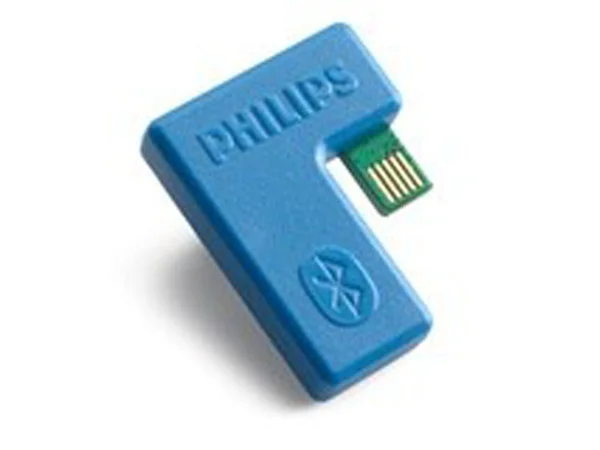 Image 1 of 1