The Philips HeartStart FR3 3-Lead ECG Cable is a medical accessory designed for use with the Philips HeartStart FR3 Automated External Defibrillator (AED). This cable facilitates the connection of ECG (Electrocardiogram) monitoring leads to the AED, enabling the device to monitor and display the patient's heart rhythm. Here is a description of the Philips HeartStart FR3 3-Lead ECG Cable:
1. Purpose:
2. Connection:
Connector: The cable is equipped with a connector that attaches to the AED's ECG port or socket.
Electrodes: The other end of the cable connects to the ECG electrodes, which are typically placed on the patient's chest to detect and transmit the electrical activity of the heart.
3. ECG Leads:
Three Leads: The cable is referred to as "3-Lead" because it typically includes three individual leads. These leads are the pathways for transmitting electrical signals from the electrodes to the AED. They are usually color-coded for easy identification (e.g., white, black, red).
Placement: The ECG leads are positioned on specific areas of the chest to monitor the electrical activity of the heart from different angles.
4. Compatibility:
The Philips HeartStart FR3 3-Lead ECG Cable is a medical accessory designed for use with the Philips HeartStart FR3 Automated External Defibrillator (AED). This cable facilitates the connection of ECG (Electrocardiogram) monitoring leads to the AED, enabling the device to monitor and display the patient's heart rhythm. Here is a description of the Philips HeartStart FR3 3-Lead ECG Cable:
1. Purpose:
2. Connection:
Connector: The cable is equipped with a connector that attaches to the AED's ECG port or socket.
Electrodes: The other end of the cable connects to the ECG electrodes, which are typically placed on the patient's chest to detect and transmit the electrical activity of the heart.
3. ECG Leads:
Three Leads: The cable is referred to as "3-Lead" because it typically includes three individual leads. These leads are the pathways for transmitting electrical signals from the electrodes to the AED. They are usually color-coded for easy identification (e.g., white, black, red).
Placement: The ECG leads are positioned on specific areas of the chest to monitor the electrical activity of the heart from different angles.
4. Compatibility:

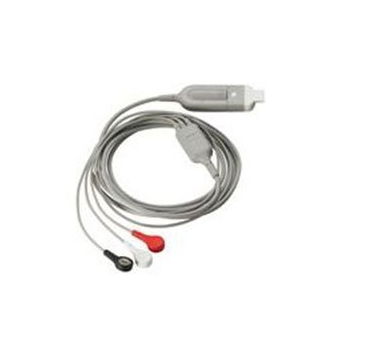 Image 1 of 1